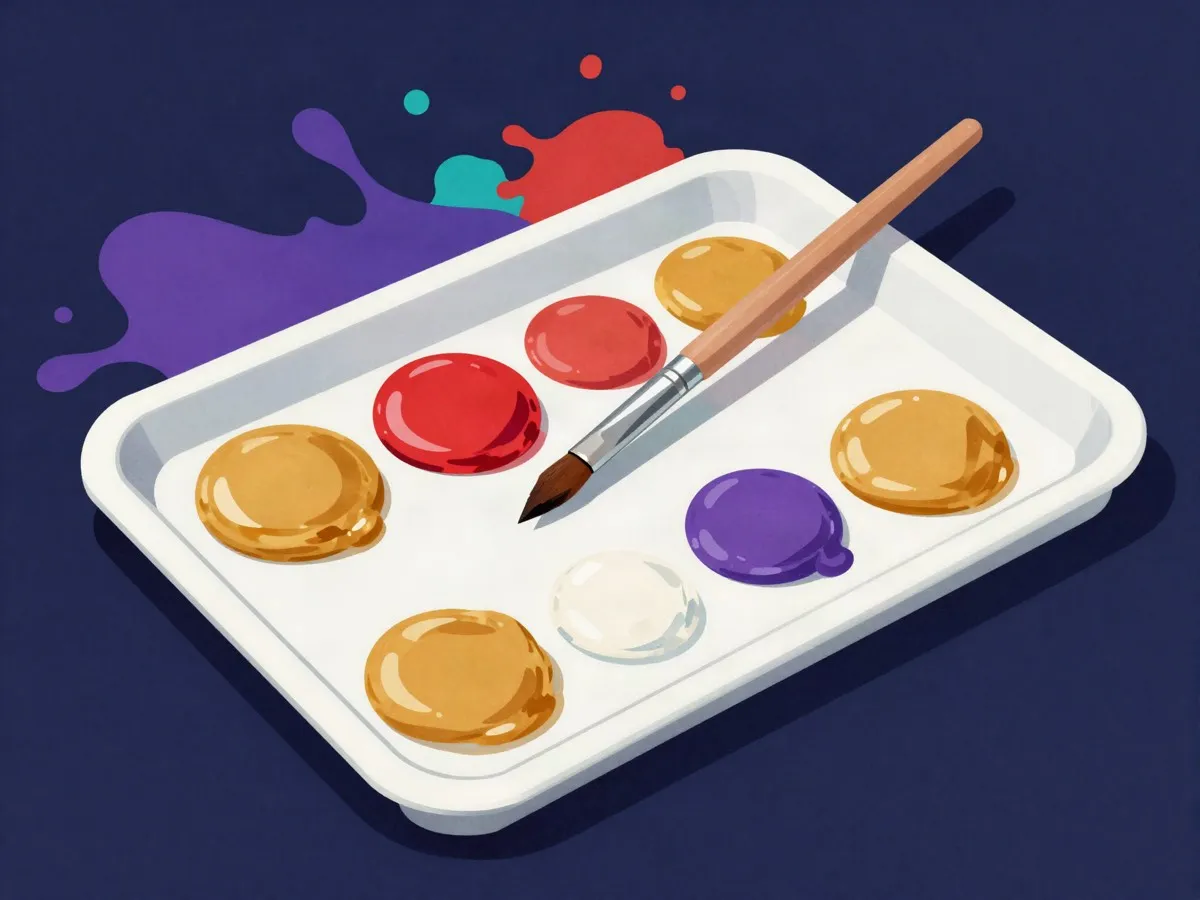
Miniature acrylics start drying the moment they hit a dry palette — workable for two or three minutes, skinned over in ten. A wet palette fixes that with kitchen physics: paint sits on parchment over a damp sponge, water migrates up through the paper, and the paint stays workable for hours. Close the lid and it is often still usable the next day.
It is the single accessory that changes how painting feels, because it removes the clock. Mixes survive a whole session, thinned paint stays thinned, and color-matching a mix from yesterday stops being a memory game.
Make one for pennies
A bought wet palette is a shallow box, a sponge, and special paper. You can assemble the same thing from the recycling:
- A shallow airtight container — a takeaway tub with a lid is perfect.
- Something to hold water — a kitchen sponge trimmed to fit, or a folded wad of paper towel.
- The membrane — baking parchment (not wax paper). Soak the sponge, pour off standing water, lay the parchment on top, and press it flat. If the parchment curls, it is too dry underneath; if paint spreads into puddles, there is standing water — tip some out.
Commercial versions buy you a nicer seal and pre-cut papers, and their membrane papers are more consistent than parchment. The physics is identical.
The two habits that make it work
Mind the wetness. The sponge should be saturated but not swimming. Watery paint that will not hold an edge means too wet; parchment lifting at the corners means too dry. You will calibrate within two sessions.
Change the paper, keep the sponge. Paper is per-project consumable; the sponge just gets re-wetted. If a closed palette starts smelling after a week, rinse the sponge and add a drop of dish soap to the water — some painters add a drop of vinegar to hold off mold.
What a wet palette will not do
Metallics separate on it (their flakes drift), one-coat paints like Contrast lose their formulation if they sit thinning on damp paper, and drybrushing wants the opposite of a wet palette — load from a dry surface, as covered in how to drybrush miniatures. Regular acrylics from every major range — Citadel, Vallejo, Army Painter, Pro Acryl, Two Thin Coats — behave beautifully on one, which is why it sits in the core kit in our supplies guide.